
Why I Built This
This project started as something simple: I wanted to build a toy for my kids. A real, walking, six-legged robot they could hold, control, and be genuinely excited about.
But as it grew across several generations — through underpowered servos, a hunt for real torque, and a complete chassis redesign — it became something more. The hexapods are now a platform I hope my kids will one day use to learn the skills that matter: 3D printing, electronics, coding, and the engineering mindset of iterating until something actually works.
Every design decision, every prototype, and every hard-won fix is part of the story. That’s the whole point.
The Foundation
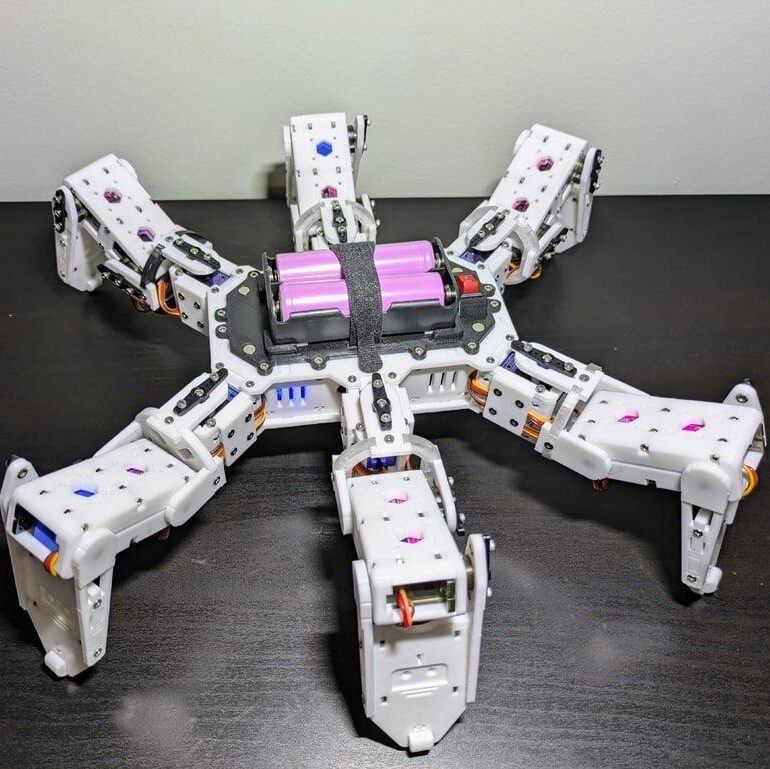
The Ambitious Baseline
Every great robotics project begins with a simple question: Can I make this move smoothly? The first version was a proof of concept to test leg geometry and basic multi-directional locomotion.
Physics caught up quickly. Built around standard MG90S micro servos, the robot was fighting an uphill battle — the servos were simply too weak for the combined weight and dynamic forces of walking. The internal wiring layout was clunky and prone to tangling.
The Quest for Power
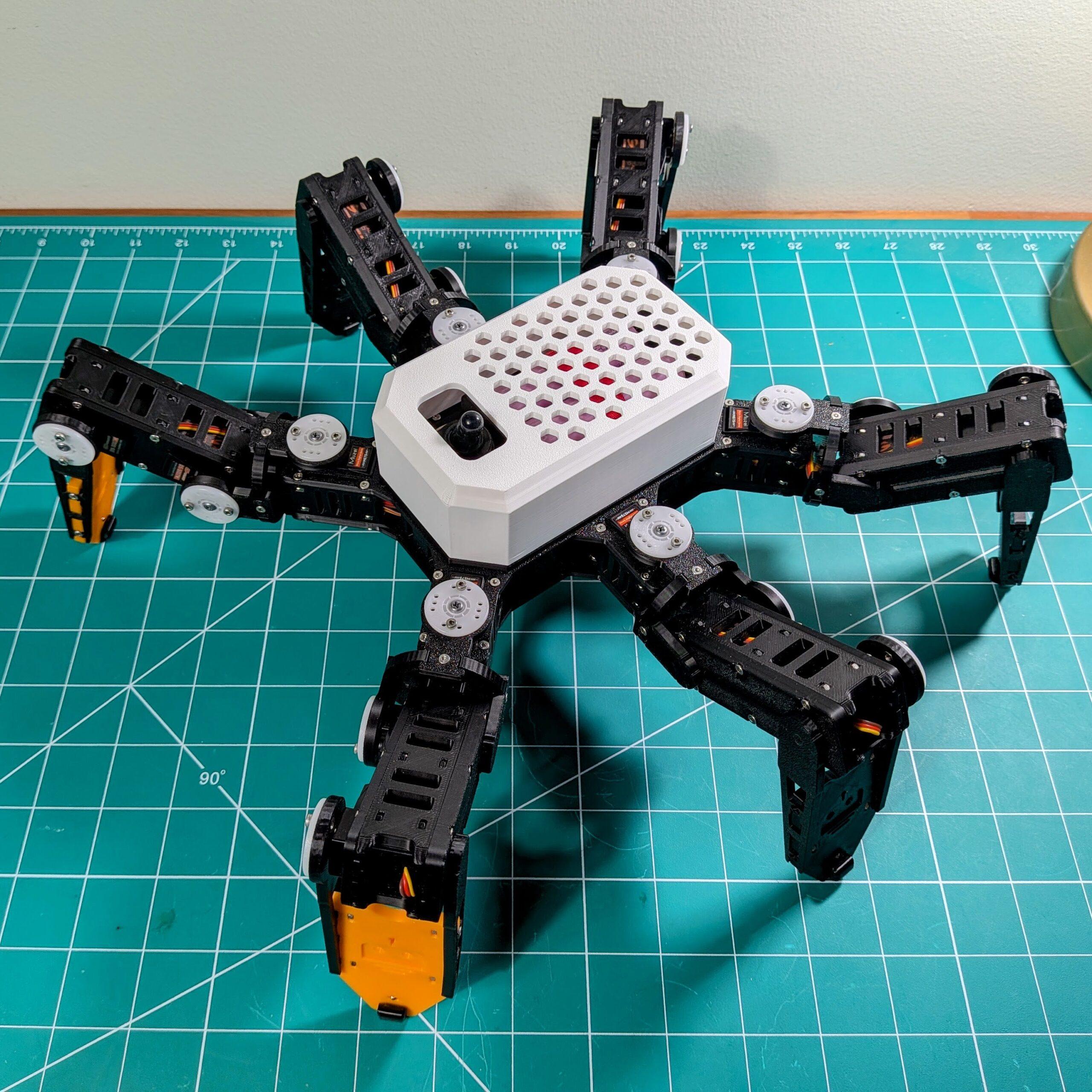
Torque, and the Signal to Match It
To solve v1’s power deficit, v2 went after torque directly. The legs were completely redesigned around beefier 21G digital servos, and the electronics moved to an ESP32 with WiFi built in.
Torque alone wasn’t the whole answer — clean, precise servo timing mattered just as much. Dedicated PCA9685 PWM drivers and a power stage sized for all 18 servos at once turned the extra strength into a smooth, steady gait. This is Nougat.
📚 Build Your Own – Nougat
Everything you need to 3D print, assemble, wire, and calibrate your Nougat hexapod is consolidated into one comprehensive, step-by-step build guide.
📖 Read the Full Build Guide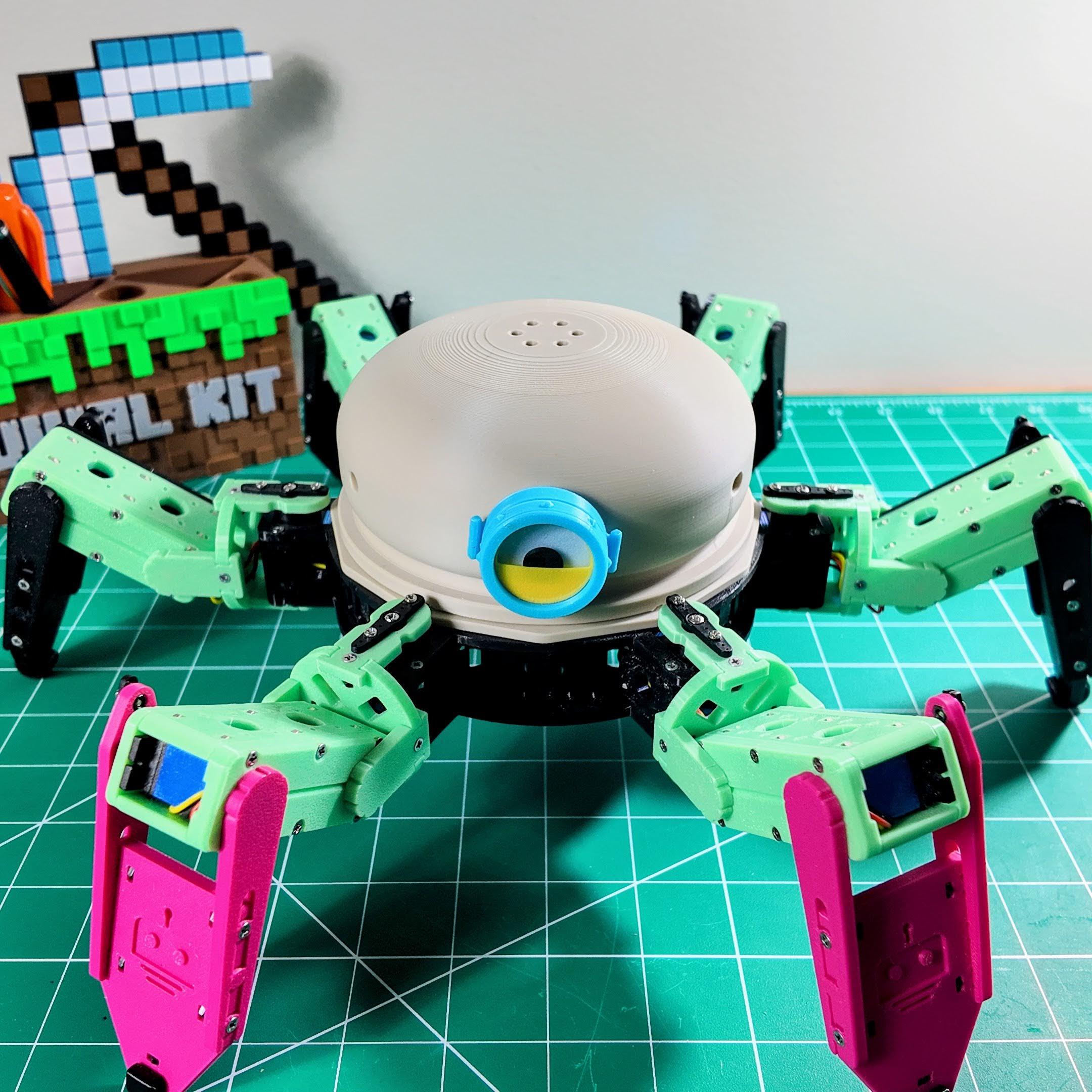
Refinement & Redesign
Form, Function, and the Perfect Fit
The next step came with the MG92B servo — the strongest micro servo available that still fits a compact form factor. It delivers high torque in a noticeably smaller footprint than the 21G, which opened the door to a tighter body.
With hardware dialed in, the chassis was radically transformed. The rectangular body gave way to a sleek circular layout, improving symmetry, multidirectional leg clearance, and lending the robot a distinctly friendly personality. Meet Mochi.
📚 Build Your Own – Mochi
Everything you need to 3D print, assemble, wire, and calibrate your Mochi hexapod is now consolidated into one comprehensive, step-by-step build guide.
📖 Read the Full Build Guide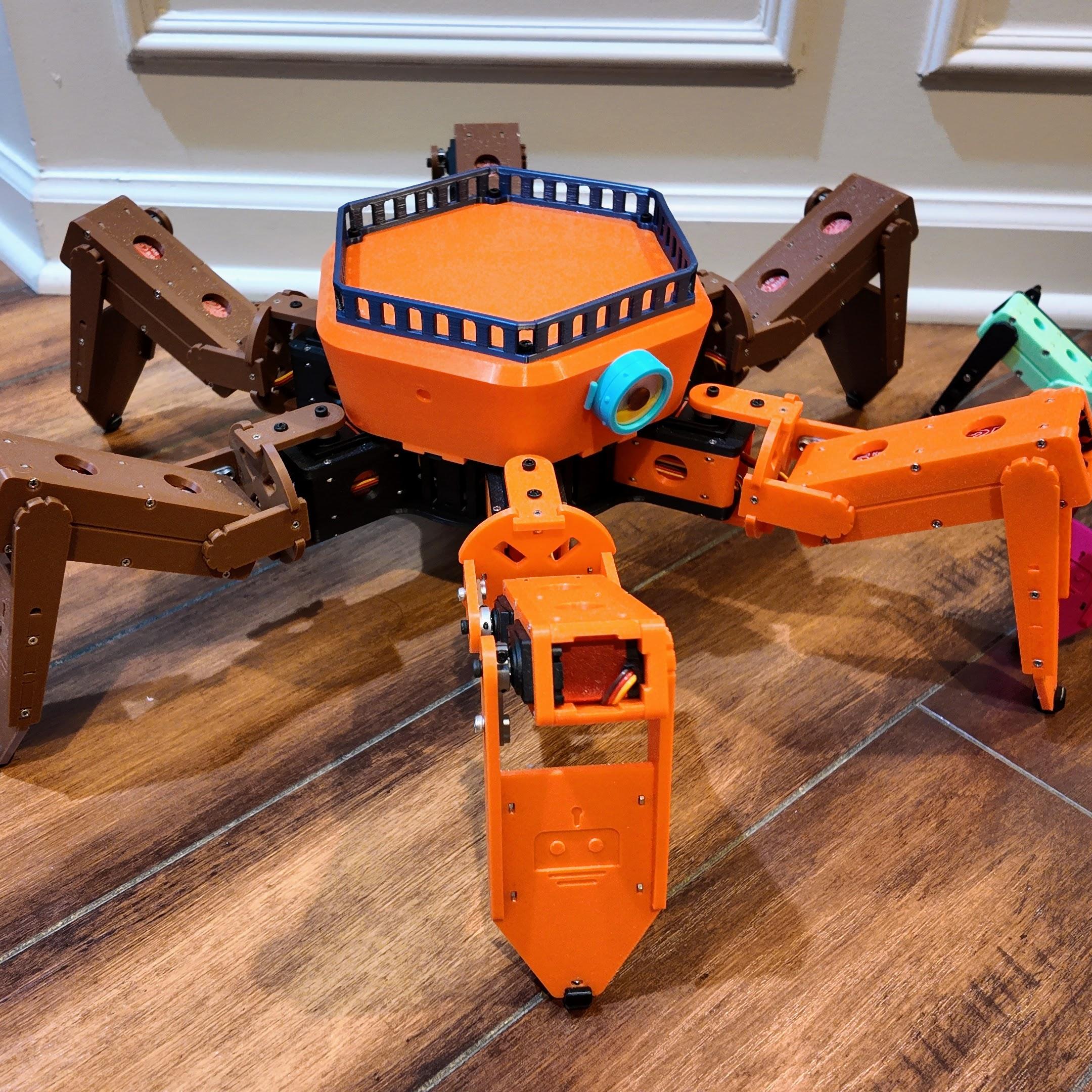
Hexapod Macaroon
Scaling Up
Built on everything learned across three generations, Macaroon is the biggest and strongest of the family. Eighteen 25kg digital servos replace the micro servos of earlier versions, with the leg geometry and body opened up to match.
Power moved up with it. Four 18650 cells in a 2S2P pack feed the servos directly at up to 8.4V through a controller board built specifically for the load — twice the capacity of the two-cell builds, and torque to spare.
📚 Build Your Own – Macaroon
Everything you need to 3D print, assemble, wire, and calibrate your Macaroon hexapod is consolidated into one comprehensive, step-by-step build guide.
📖 Read the Full Build Guide⚙️ Design Philosophy
Mochi is a six-legged, WiFi-enabled crawler with 18 degrees of freedom and a circular body that balances weight, simplifies wiring, and improves stability. Driven by an ESP32 over a built-in WiFi access point, it supports over-the-air firmware updates and full gait customization. Every structural decision was deliberate.
Layer Orientation
Print layers align with load directions, distributing stress along their length to prevent delamination under walking forces.
Reinforced Joints
Leg segments and servo mounts feature strengthened connection points that spread loads and minimize stress concentrations.
Circular Frame
The round body optimizes the weight-to-rigidity ratio for stable locomotion and even servo load distribution across all six legs.
Modular Assembly
Interlocking components reduce adhesive dependency and make repairs or upgrades straightforward without specialized tools.
Material Flexibility
Geometry is optimized to perform reliably with standard PLA or PETG, maintaining durability under repeated dynamic stress.
Full Control Stack
Includes a BOM, wiring diagrams, gait look-up tables, path generation tools, and an Android app for point-and-go control.